My father remained silent for what felt like an eternity.
He stayed seated, the photograph trembling in his hands, its corners curling under the force of his grip. My mother hovered near the doorway, one hand pressed to her chest, breathing as if every ounce of air had vanished from the room.
Leo glanced back and forth between the adults.
“Mom?” he asked softly. “Who’s Ethan?”

I turned to face him, and for one fleeting second, the entire world softened. How could I possibly explain that the man whose name had shadowed my life for a decade was more than just a ghost from the past? How could I tell my son that his father had been brave, brilliant, relentless, and doomed?
I knelt down so we were eye-to-eye.
“Ethan was someone very special,” I told him. “He was kind, he cared deeply about people, and he tried to stop something terrible from happening.”
Leo studied my face. “Was he my dad?”
The room fell completely still.
I had imagined this moment countless times over the years. In some versions, I kept my composure. In others, I broke down. Sometimes Leo got upset; sometimes he hugged me. But in none of those imagined scenarios did my parents sit right behind us, shattered by the exact same truth.
“Yes,” I whispered. “He was your dad.”
Leo looked down at our joined hands, his small fingers squeezing mine a little tighter. “Did he know about me?”
My throat tightened. “No,” I said gently. “He vanished before I ever had the chance to tell him.”
Leo gave a quiet nod, trying hard to look older than ten. Then he looked over at my father. “Did Grandpa know him?”
My father flinched as if struck.
I slowly stood back up. “That’s what we need to figure out.”
Dad looked down at the photograph again. “I don’t remember this,” he said, his voice laced with confusion. “I swear to you, Anna, I don’t remember standing there with Ethan.”
My mother wiped a tear from her cheek. “Richard, please,” she pleaded, her voice shaking. “Think.”
He closed his eyes tight. “I remember the plant supervisor, Martin Vale. Everybody knew him—cold man, always polite, never kind.” Dad rubbed his temples. “I remember the safety audits. The overnight shifts. The rumors floating around. I remember Ethan coming around and asking questions.”
My heart skipped a beat. “You knew he was investigating?”
Dad nodded heavily. “Everybody did. At first, people laughed it off. Just some college kid thinking he could take down a corporate giant.” He opened his eyes, and they were filled with shame. “But then he started actually uncovering things.”
“What kind of things?”
Dad glanced toward the flash drive sitting on the table. “The truth.”
The single word hung heavily in the air like dust motes in a beam of light.
Mom stepped closer. “Richard, did you help him?”
Dad’s lips parted, but no sound came out. He stared down at the picture again, particularly at Ethan’s handwriting scrawled across the back: YOUR FATHER TRIED TO WARN THEM.
“I don’t know,” Dad whispered.
A cold, unfamiliar dread washed over me. For ten years, I had believed my father’s fury stemmed entirely from my refusal to give up Leo, or to name his father, or to conform to his expectations. I thought he kicked me out simply because I was pregnant, unmarried, and defiant.
But now, a terrifying thought crept in. What if his anger hadn’t just been about me?
What if it was fear? Guilt? Or a suppressed memory of something he had tried desperately to forget?
I reached out and picked up the flash drive. “There’s more.”
Dad looked at me as if I were holding a loaded weapon. “What do you mean?”
“When I opened it last month, I found a folder labeled R.H.”
My father’s initials. Richard Hayes.
My mother’s breath hitched. “What was inside?”
“Audio recordings.”
Dad shot out of his chair so fast it tipped backward and hit the floor with a crash. “No.”
His violent reaction startled Leo, who immediately stepped closer to my side. Dad backed away from the table, shaking his head frantically. “No. I won’t listen to them.”
“Richard,” Mom pleaded.
“I said no!”
His voice broke, cracking not with anger, but with absolute terror.
And in that instant, it all clicked into place. Parts of his memory were still locked away—maybe not entirely clear, but deep down, he knew whatever was on that drive could completely destroy the fragile life he had built out of silence.
I slipped the flash drive back into my bag. “All right. Not tonight.”
Dad looked at me, his eyes shining with unshed tears. “Anna, listen to me. If Ethan left you that drive, he trusted you. But men like Martin Vale don’t just disappear because time has passed. If the evidence on that drive is real, everyone tied to it is in danger.”
“I know.”
“No, you don’t,” he said, his voice dropping to a harsh whisper. “You have no idea what those people are capable of.”
A heavy silence settled over us.
Mom looked at him, her expression lined with worry. “What did they do, Richard?”
He met her gaze, and for the first time in my entire life, my father looked entirely helpless.
“I can’t remember all of it,” he admitted, staring at the floor. “But I remember waking up one morning in my truck parked off an old quarry road. My shoes were caked in mud. There was blood on my sleeve.”
Mom gasped, clapping a hand over her mouth.
Dad slowly raised a trembling hand. “It wasn’t mine.”
Leo instinctively slipped behind my back, hiding. Part of me wanted to send him upstairs to shield him from every painful word in this room, but this was his history, too. His father’s legacy. His future.
“What happened next?” I asked softly.
Dad swallowed hard. “I went back to work the next day. Martin Vale called me into his office. He told me I’d had a stress-induced episode, that I’d been disoriented, and ordered me to take two weeks off.”
“Did you?”
“Yes.”
“And when you went back?”
Dad stared blankly at the photograph. “Ethan was gone.”
Mom clutched her chest. A chilling realization rippled through me.
“All this time,” I said, my voice barely a whisper, “you knew something was deeply wrong.”
Dad nodded, silent tears tracing paths down his cheeks. “I just couldn’t prove it. Then your mother got sick, then I got sick, and the medical bills started piling up. The company doctor told us it was just bad luck—aging, genetics, anything except the river. Anything except the plant.”
He looked across the room at Leo. “And when you came home pregnant, refusing to tell me who the father was, warning me that it would affect all of us…” His voice cracked completely. “I thought you’d gotten mixed up with someone dangerous. I genuinely believed I was protecting you by shutting the door.”
A dry, bitter laugh escaped my lips. “You protected me by abandoning me?”
Pain flashed across his face. “No. I failed you.”
The simplicity of the words hit harder than any fiery apology could have.
For ten years, I had worn my bitterness like a suit of armor. It kept me upright when I was young, broke, pregnant, and terrified. It pushed me through the sleepless nights, the endless shifts, the skipped meals, and the agonizing birthdays when Leo asked why his grandfather didn’t care.
But right now, that armor felt entirely too heavy to carry.
Mom walked over slowly, her eyes red. “Anna,” she whispered, “I am so sorry.”
I looked at her, and the little girl inside me desperately wanted to run into her arms. But the woman I had become didn’t quite remember how.
Before I could answer, the house phone rang.
Every single one of us froze. Nobody called my parents’ landline anymore; it was a relic of the past.
The shrill ring cut through the quiet room a second time.
Dad stared at the phone as if it were a venomous snake. “Don’t answer it,” I warned.
It rang a third time.
Mom swallowed nervously. “Richard…”
Dad took a hesitant step forward and reached out.
“Don’t,” I repeated, stepping in front of Leo.
He picked up the receiver anyway. For several long seconds, he just listened in absolute silence. Then, all the remaining color drained entirely from his face.
A voice muttered something from the other end—low, calm, and unmistakably male. I couldn’t make out the words, but I could read the sheer panic washing over my father’s features.
Dad’s shoulders stiffened. His eyes darted to me, then to Leo, and finally to my bag containing the flash drive.
At last, he whispered into the phone, “How did you know?”
My stomach twisted into knots.
He listened for another moment. Then the line went dead. Slowly, mechanically, Dad lowered the receiver back onto the cradle.
“What did they say?” I demanded.
He looked straight at me, his voice hollow. “They said Ethan should have stayed buried.”
Mom let out a muffled cry. Leo gripped my hand tightly.
I didn’t hesitate. “Get your coats.”
Dad blinked, dazed. “What?”
“We’re leaving.”
“Anna—”
“Now.”
My voice carried an edge I hadn’t intended, but nobody argued. Within minutes, we were piling into my car. Leo climbed into the back seat beside my mother, while Dad sat up front in the passenger seat, staring out into the dark, rainy night as water slicked the windshield.
The town looked exactly the same as it always had: quiet neighborhoods, dark porches, and the old church steeple piercing the skyline. It was the kind of place where secrets never truly disappeared—they just learned how to behave around the dinner table.
I drove without turning on the radio.
“Where are we going?” Mom asked from the back.
“Mara’s.”
Mara Chen had been my best friend since high school. Nowadays, she worked as a hard-hitting investigative journalist for an independent newsroom a couple of counties over. When I finally unlocked Ethan’s flash drive last month, she was the very first person I called.
She had warned me not to go to the police right away—not until we knew who was still protecting the corporation, and not until every piece of data was safely backed up somewhere it couldn’t be scrubbed.
Dad turned his head to look at me. “You already told someone else about this?”
“Yes.”
“Good,” he murmured.
That caught me off guard. “I thought you’d be furious.”
“I’m done being afraid of the wrong things,” he replied quietly.
His words stayed with me as we navigated the winding, rain-slicked roads. Halfway to Mara’s apartment complex, a set of headlights appeared in our rearview mirror.
At first, I brushed it off. But then the car stayed directly behind us through three consecutive turns.
Dad noticed it too. “Don’t speed,” he advised under his breath. “Just keep driving.”
Leo leaned forward from the back. “Is someone following us?”
“No,” I lied smoothly.
Mom instinctively wrapped a protective arm around him. The headlights drew closer, glaring in our mirrors, and my pulse hammered against my ribs.
Dad reached into his coat pocket and pulled out an old key ring. “There’s a service road coming up,” he said. “Take a sharp left right after the bridge.”
“How do you know?”
“I used to take it to the plant.”
The bridge loomed ahead, glistening under the drizzle. I jerked the steering wheel and took the left turn at the very last second. The vehicle behind us blew right past, continuing straight ahead into the dark.
For one long, breathless moment, nobody moved. Then Leo let out a shaky sigh of relief.
When we pulled up to Mara’s building, she was already waiting outside under a red umbrella, her dark hair plastered against her cheeks.
“Inside,” she ordered before we could even kill the engine.
Her apartment was cramped, overflowing with stacked notebooks, camera gear, takeout boxes, and three open laptops glowing brightly across the kitchen table. She locked the deadbolt behind us before pulling me into a fierce hug.
“You should have called sooner.”
“I know.”
Mara’s gaze flicked past me to my parents, then down to Leo. “This is everyone?”
“For now.”
She looked directly at my father. “You’re Richard Hayes.”
Dad gave a slow nod.
“I need to ask you something,” Mara said, turning one of the laptops toward us. A directory from the flash drive was pulled up on the screen. One particular folder caught my eye: HARBOR_LIGHT.
Inside were scanned memos, topographical maps, lab results, and email threads. At the very bottom of the directory was a video file.
Mara clicked play.
The footage was grainy, clearly captured by an interior security camera inside some kind of storage facility. Metal shelving lined the walls overhead, and fluorescent lights buzzed in the background.
Ethan appeared on screen. He looked younger than I remembered, but his intense gaze was unmistakable—unruly hair, tight jaw, eyes burning with absolute urgency.
And standing right beside him was my father.
Mom gasped, covering her mouth.
On the screen, Ethan hefted a stack of papers. “They know,” Ethan said, his voice tense. “They’ve known for years. The waste barrels are actively leaking into the riverbed.”
Dad’s recorded voice replied, low and gravelly. “I handed the report directly to Vale.”
“And?”
“He told me to forget I ever saw it.”
Ethan stepped closer. “Then we go public.”
Dad shook his head grimly. “You don’t understand this town. Vale owns everyone—judges, local cops, doctors, half the city council.”
“Then we make copies.”
“I already did.”
Everyone in Mara’s living room went dead silent as we watched the monitor.
On the screen, Ethan stared hard at him. Dad reached into his jacket pocket and pulled something out, handing it directly to Ethan.
A flash drive.
Not the one I had. A second one.
The real-life Dad standing beside me let out a choked sound, as if all the air had just been punched from his lungs.
In the video, Dad muttered, “Harbor Light. That’s the password. If anything happens to me, release it.”
Ethan’s expression turned grim. “What if something happens to me first?”
Dad rested a heavy hand on his shoulder. “Then God help us all.”
The video cut to black.
Nobody spoke. Mara leaned back in her chair, crossing her arms. “There were references to a second archive scattered throughout Ethan’s files, but he never had it—he only had fragments. But Richard…” She looked up at my father. “You had the original.”
Dad pressed both hands hard against his temples. “I still can’t remember.”
“Try,” I urged him gently.
He closed his eyes tight. Outside, rain tapped softly against the windowpanes, and somewhere down the hall, a pipe groaned in the walls. Leo sat perfectly still beside my grandmother, watching wide-eyed.
“A locker,” Dad whispered suddenly.
My heart skipped a beat. “What locker?”
“I don’t know… metal. A blue door.” His breathing sped up. “There was a serial number. I can almost see it.”
Mara grabbed a pen and a notepad. “Was it at the plant?”
“No,” Dad shook his head rapidly. “Somewhere public. Somewhere they’d never think to look.”
His eyes suddenly snapped open. “The bus station.”
Mara stood up immediately. “The old Greyhound station?”
“It closed down eight years ago,” Mom pointed out.
“No,” Dad corrected, remembering. “Right before they shut its doors for good, all unclaimed storage units were transferred to the county municipal depot.”
Mara was already flying across her keyboard. “County property warehouse. It opens at eight.”
“We can’t wait until morning,” I argued.
Mara looked up at me, serious. “Anna, breaking into a municipal warehouse isn’t exactly a casual weekend errand.”
“Neither is sitting here while whoever killed Ethan is calling my parents’ house.”
She had no counterargument to that.
Dad squared his shoulders. “I know a guy who used to work security over there.”
“Can you trust him?” Mara asked sharply.
Dad’s jaw tightened into a hard line. “Ten years ago, I would have answered yes about a lot of people. Today? I honestly don’t know.”
It wasn’t exactly reassuring, but it was our only lead.
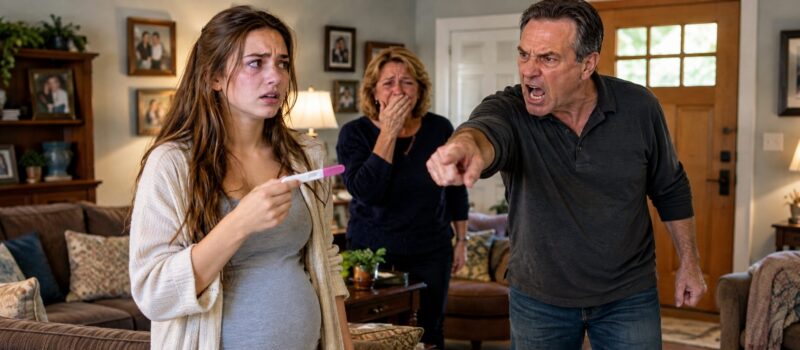
We left Leo and my mother safe inside Mara’s apartment with strict orders not to open the door for anyone. Before I walked out, Leo hugged me fiercely around the neck.
“Mom?” he whispered into my hair. “Was my dad brave?”
I pressed a kiss to his forehead. “Yes. Incredibly brave.”
“Are you?”
The question caught me completely off guard, threatening to crack my resolve. “I’m trying my hardest to be.”
Outside, the heavy downpour had slowed to a misty drizzle. Mara drove this time while Dad rode shotgun and I sat in the back, clutching my phone like a lifeline. Every passing set of headlights felt like a threat; every shadow looked like a trap.
The county property depot sat behind a tall chain-link fence near the old railroad tracks, illuminated by a single buzzing yellow security light overhead.
Dad placed a call to his former coworker, Calvin Price. To my absolute shock, Calvin picked up on the second ring. When Dad hurriedly explained the situation, Calvin stayed silent for a long, agonizing moment.
Then, he simply said, “I always wondered when this day would finally come.”
Twenty minutes later, a beat-up pickup truck rolled up to the rusted gate. Calvin was thin, gray-bearded, and visibly shaking with nervous energy. He unlocked the padlock without a word of greeting.
“You shouldn’t be here,” he muttered as we slipped past him.
“We know,” Mara said.
“No,” Calvin shot back, glancing nervously into the dark shadows. “You really have no idea.”
He led us deep into the warehouse, navigating past towering rows of dusty shelves, plastic-wrapped furniture, and stacked crates. The air smelled thick of old cardboard and stagnant dust.
“After the station closed down, everything unclaimed got dumped here into Section C,” Calvin explained, flashing a weak light beam across the aisles. “Most of it got auctioned off eventually, but a few secure lockers stayed sealed because the administrative paperwork vanished.”
Dad looked around, pale and sweating despite the cool air. “Blue door,” he murmured, wandering down an aisle. “It has to be…”
One year after I stood knocking on my parents’ front door with Leo by my side, we returned to the river.
Not for a courtroom battle. Not for a somber memorial. For a celebration.
The environmental cleanup was finally making a tangible difference—slowly, imperfectly, but undeniably. The eroded riverbanks had been reinforced with fresh, rich soil and native plantings. While warning signs still stood in a few designated spots, vibrant wildflowers now lined the walking paths. Children weren’t quite ready to swim in the currents yet, but families had started gathering beneath the shade of the grand oak trees once more.
Nora Price—Calvin’s daughter, who had also joined the legal advocacy team—helped organize the community event after the civil settlement was officially finalized.
The money could never fully reverse the decades of corporate damage. Nothing ever could. But it would cover mounting medical expenses, restore the polluted wetlands, fund local youth scholarships, and build a fully independent community health clinic free from corporate interference.
The primary scholarship fund was named in honor of Ethan Brooks.
Leo wasn’t old enough to apply for it yet, but he had insisted on helping review the finalist applications.
“He would’ve wanted somebody who asks too many difficult questions,” Leo declared proudly.
Nora laughed. “That might just become the official prerequisite.”
We had officially moved back to Ohio two months prior. We didn’t move back into my parents’ house—there was simply too much heavy history under that particular roof. Instead, Leo and I rented a charming little yellow house three blocks away, complete with a crooked front porch and a backyard big enough for homemade model rockets that rarely flew straight.
Dad spent his weekends helping me fix up the steps. Mom planted an extensive herb garden right beneath the kitchen window. And every single Sunday afternoon, Ruth Brooks would show up at our door carrying a warm homemade pie and another fond childhood story about Ethan.
Our family didn’t magically transform into a picture-perfect postcard overnight.
Mom and I still had tense moments. Every now and then, a careless remark would reopen old emotional scabs. And sometimes Dad’s overwhelming guilt made him overly cautious, trying a bit too hard to make amends, forcing me to gently remind him that I wanted a real father, not someone trying to pay off an infinite debt.
Occasionally, Leo would grow quiet after watching other kids play with their fathers. On those specific evenings, he would go to his room and play Ethan’s cassette tape—not the whole harrowing recording, just the very first sentence.
“Hey, little one.”
Then he would sit quietly in the dark with his eyes closed, letting a voice from the past reach across the years to find him.
The celebration kicked off just as the golden hour sun began to dip below the tree line. Handcrafted lanterns hung from the thick branches beside Ethan’s memorial stone. Long tables groaned under the weight of home-cooked food, and kids chased each other across the manicured grass while soft music drifted over the water.
Dad arrived wearing a stiff suit jacket that Leo had picked out for him specifically. It was wildly overdressed for a park gathering.
When teasing him about it, Leo deadpanned, “He looks like a retired detective.”
Dad grinned. “Good. Detectives command respect.”
Mom instantly burst into happy tears at the sight of them joking together.
“You cry at literally everything,” Leo teased, giving her a gentle nudge.
“I happen to have a very special talent for it,” she joked back, wiping her eyes.
I stood off to the side near the memorial, watching the community mingle. For so many years, this town had been the place where my entire world collapsed. Now, it was slowly transforming into a place where broken things were finding new shapes.
Nora walked up carrying a stack of printed programs. “You ready?” she asked.
“Not remotely.”
“Perfect. That means it actually matters.” She nodded toward the small wooden stage. “You’re up right after Ruth.”
I groaned. “I explicitly agreed to talk for two minutes.”
“You agreed to speak. I deliberately ignored the two-minute rule.”
“Lawyers are ruthless.”
“Only the good ones.”
Ruth spoke first, sharing a lighthearted anecdote about an eight-year-old Ethan trying to “rescue” frogs from a local drainage pond that didn’t need rescuing, bringing home twenty-three live amphibians in a bucket and releasing them directly into her bathtub.
The crowd erupted into warm laughter, and Leo laughed louder than anyone else in the audience.
When she finished, Ruth looked directly at Leo and said, “Your father firmly believed that every living creature deserved a fighting chance to find its way back home.”
My chest tightened painfully.
Then it was my turn.
I stepped up to the microphone, and the murmurs in the crowd slowly faded away. I spotted Mom sitting proudly in the front row with her hands clasped under her chin, and Dad beside her leaning heavily on his walking cane. Leo stood right between them, looking serious, attentive, and so much like his father.
I took a deep, steadying breath.
“Ten years ago,” I began, my voice carrying across the lawn, “I left this town carrying a single duffel bag, a shattered heart, and a secret I foolishly believed I had to carry entirely by myself.”
The river flowed peacefully behind me, catching the last amber reflections of sunset.
“I was nineteen years old, pregnant, and terrified of the future. When I tried to explain everything to my parents, I said something none of us fully understood at the time. I told them, ‘If I end this pregnancy, it won’t just affect me. It’ll affect all of us.’”
Dad bowed his head, staring at the grass.
“I thought I was talking strictly about the physical evidence, about Ethan’s hidden truth, about the dangers waiting in the shadows. And I was. But looking back now, I realize I meant something much bigger than that.”
I glanced down at Leo.
“I meant that sometimes, a single fragile life becomes the thread that keeps an entire family from completely unraveling.”
Leo’s eyes shone with unshed tears.
“My son didn’t save us because he was some kind of miracle fix. He saved us simply by existing. By asking the hard questions. By wanting to meet the grandparents I was too wounded and proud to face. By echoing words his father left behind in the dark.”
I instinctively touched the silver ring hanging on a chain around my neck.
“For a long time, I believed true courage meant surviving everything all alone. But Ethan understood something vital that I missed. He left pieces of the truth scattered across different people—with my father, with Nora’s dad, with me, with his mother, and ultimately, with a little boy he would never get to hold in his arms.”
My voice hitched slightly, but I pressed on.
“Love leaves instructions behind. We just have to be brave enough to follow them.”
The crowd remained completely quiet. I turned my gaze toward my parents.
“Mom. Dad. I spent a decade believing the heavy oak door that slammed behind me was the absolute end of our family.”
Mom was openly weeping now, not hiding it at all.
“But this past year taught me a profound lesson. A closed door isn’t always a permanent ending. Sometimes, it’s just the place where someone finally finds the courage to knock from the other side.”
Dad quietly wiped away a tear with the back of his thumb.
“I’m not going to sit here and say I’m grateful for what happened,” I continued, my voice steady. “I never will be. But I am deeply grateful for what we chose to do once the truth finally came to light. We chose to stay. We chose to listen, to repair what could still be salvaged, to grieve what we lost, and to love each other anyway.”
I looked at Leo one last time.
“Your father should be standing right here in my place.”
Leo nodded slowly, tears tracing a clean path down his cheek. “I know, Mom. But because he isn’t, we’ll carry him forward differently. Not like a heavy stone.”
I smiled softly through my own tears. “Like a lantern.”
The applause started softly from the front row, then swelled across the entire gathering, warm and enveloping.
I stepped down from the stage on wobbly legs, and Leo immediately bolted forward, wrapping his arms tightly around my waist.
“That was definitely way longer than two minutes,” he muttered against my shirt.
I laughed through my tears, resting my chin on his head. “Blame Nora.”
“I always do.”
Dad walked over slowly, seeming momentarily lost for words. He reached out and gently took both of my hands in his.
“I’m proud of you, Anna,” he said.
The words were simple, uncomplicated, and direct. But they landed precisely where that empty space had ached for the last ten years.
I closed my eyes. When I opened them, Mom was standing right beside him.
“I’m proud of you too, sweetheart,” she whispered.
I reached out my arms, and this time, when she pulled me into an embrace, I didn’t pull away. I held onto her just as tightly.
Not because everything in our past had been magically erased or forgotten. But because everything had finally been brought to light, and love had managed to find a way in anyway.
As the evening air cooled, Nora announced the formal presentation of the first annual Ethan Brooks Scholarship.
A fierce, sharp seventeen-year-old high school student named Maya Chen stepped forward to accept it. She had written a brilliant, fearless investigative essay exposing dangerous toxic waste dumping and substandard housing conditions right in her own neighborhood.
Leo leaned toward me and whispered conspiratorially, “Definitely curious enough.”
After the formal ceremony concluded, the children were handed paper lanterns containing safe, battery-powered lights. Rather than releasing them into the sky or floating them down the current—Nora made sure to maintain strict environmental standards with characteristic legal precision—they carried them in a glowing procession along the walking trail.
Leo carried his own lantern proudly. Dad walked right beside him, matching his pace. Mom, Ruth, and I followed a few steps behind, watching the warm glow cast long, dancing shadows.
When they reached Ethan’s memorial stone, Leo came to a stop. He stared at the engraved letters, then out at the moving water of the river, and finally up at my father.
“Grandpa?”
“Yes, buddy?”
“Do you think my dad would be upset that I’m happy?”
The innocent question hung in the air, instantly melting whatever lingering defenses any of us had left.
Dad knelt down slowly, wincing slightly at the movement in his knees. “No,” he said, his voice thick with emotion. “I think he fought every single day so that you could be.”
Leo looked down at the soft light glowing from inside his paper lantern. Carefully, he knelt and placed it gently at the very base of Ethan’s memorial.
“I think I want to be a scientist when I grow up,” he announced.
Ruth smiled warmly. “Is that right?”
“Or a lawyer. Maybe both. Somebody has to make sure people don’t do stupid things with chemicals.”
Nora called out from nearby with a grin, “For the record, I fully endorse that career path.”
Leo turned back toward the dark, winding river. Then, in a voice so quiet it was almost swallowed by the night breeze, he added a final thought:
“The river always remembers what people try to bury.”
After a brief pause, he added something entirely unexpected, a sentence none of us had ever spoken aloud.
“But it also remembers what people plant.”
None of us said a word. Because it was a sentiment none of us had anticipated—not something Ethan had ever written down, but a truth Leo had discovered entirely on his own.
That was perhaps the most astonishing revelation of all. Not that our past had been buried under years of silence and secrets, but that the future still possessed infinite room to grow.
Dad reached out and took one of my hands. Mom reached for the other. Ruth rested a comforting hand gently on Leo’s shoulder.
And right there by the water—scarred, imperfect, but finally rebuilt—we stood together beside a river that had once carried poison, hidden evidence, and deep grief, but had finally brought us back to hope.
Years from now, people in this town would tell this story in a dozen different ways.
Some would say Ethan Brooks single-handedly brought down a corrupt corporate empire. Others would argue that Robert Hale remembered the truth just barely in time for it to matter. A few would simply remember that a young mother named Emma returned home with her son and shattered a decade of unbroken silence.
But I knew the real story.
A frightened nineteen-year-old girl refused to give up her unborn child because somewhere deep beneath all her terror and heartbreak, she clung to one impossible, stubborn truth:
That child was never the end of her life.
He was simply the beginning of everyone’s second chance.
Leo slipped his small hand back into mine as we started the walk home.
“Mom?”
“Yeah, buddy?”
“Can we get pancakes after this?”
I laughed, wiping a happy tear from my cheek. Dad chuckled. Mom smiled brightly. Even Ruth laughed softly through her own tears.
And just like that, the heaviest chapter of our lives concluded—not with revenge, not with destruction, but with a little boy asking for late-night breakfast beneath a sky full of glowing lanterns.
Together, step by step, we walked home.
The river flowed steadily beside us. The front door was wide open.
And the future was finally waiting.





