“We went to Hawaii. Don’t worry, Mrs. Margaret. At your age, it’s better for you to stay home and rest.”
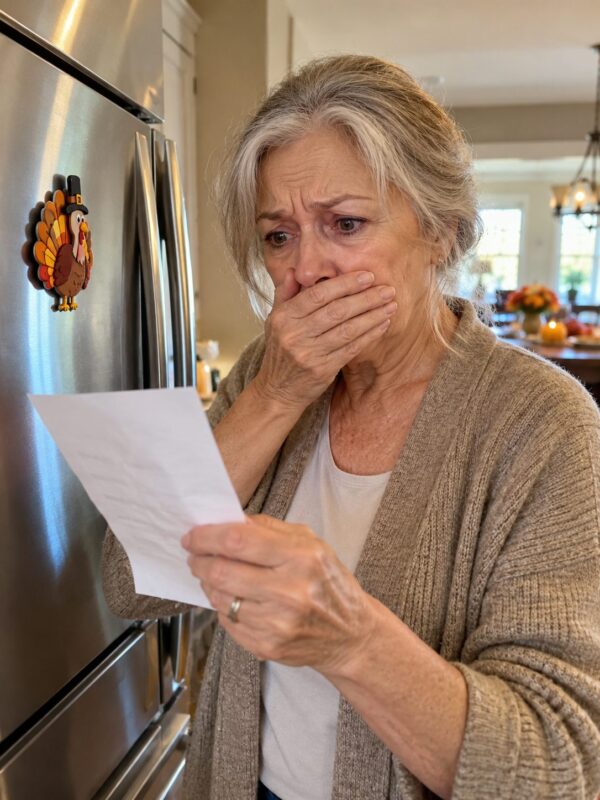
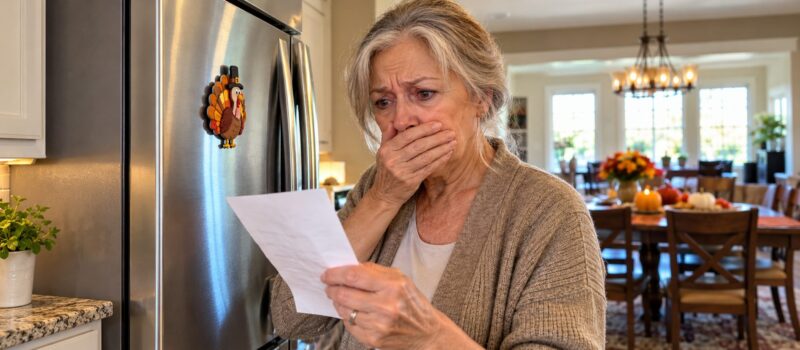
That was the note pinned to the refrigerator with a turkey-shaped magnet.
Margaret Collins read it three times as she stood alone in the quiet kitchen of her son Daniel’s home in Scottsdale, Arizona.
Thanksgiving mornings used to smell like cinnamon, brewed coffee, and melted butter. But that Thursday, the house was completely devoid of scent. No chatter, no morning cartoons blaring in the background, no footsteps of her grandchildren racing down the hall.
“Emily?” she called out first.
Nothing.
“Jack?”
Silence.
She walked upstairs slowly. The kids’ beds were neatly made. Their backpacks were gone, along with their jackets. Over in the master bedroom, Daniel and Rebecca’s suitcases were missing, too.
She headed back downstairs with a strange, heavy calm—the kind that settles in right before the pain truly hits.
The SUV was missing from the garage.
Rebecca’s car was gone as well.
Only Margaret was left.
That, and the note:
“We decided to spend Thanksgiving in Hawaii this year. We didn’t tell you sooner because we knew you would insist on coming. The flight is long, and you get tired too easily now. We’ll be back in a week. There’s soup in the freezer.”
Margaret set the note down on the table.
She was seventy-three, not helpless. She didn’t need anyone deciding for her whether she could board a plane, navigate an airport, or sit on a beach.
What hurt most wasn’t that they had taken off without her.
It was that they’d left her behind like a houseplant someone remembered to water right before heading out of town.
Four years ago, after Arthur passed away, Daniel had urged her, “Mom, move in with us. I don’t want you living alone. Plus, it’d be wonderful for the kids to have you around.”
So Margaret sold her modest apartment in Oak Park and relocated to Arizona. She put a good chunk of the proceeds toward the down payment on their house. She bought the refrigerator, the living room furniture, the washer and dryer, the curtains, the dining table, and even the high-end Italian espresso machine Rebecca loved showing off to guests.
At first, they treated her like a blessing.
Over time, that blessing morphed into an expectation.
Whenever Margaret wanted to go downtown with a friend, Rebecca’s lips would tighten. “And who’s supposed to pick the kids up from swim practice?”
If Margaret mentioned her back was bothering her, Daniel would just sigh. “Mom, we’re only asking you to help with dinner. It’s not a huge ask.”
Whenever she bought something for herself, Rebecca would slip in a comment: “Must be nice that you can still splurge on little luxuries, considering how brutal the bills are around here.”
The tipping point came six months earlier. Rebecca had been out on the patio talking on the phone, assuming no one was listening.
“We can’t ask her to move out. She babysits, covers expenses, and buys groceries. It’s not even about her—it’s her money that’s keeping us afloat.”
Margaret hadn’t said a word. She tucked that pain deep inside, like a needle hidden under fabric.
But standing in that empty house on Thanksgiving morning with that note in her hands, clarity finally hit.
They hadn’t asked her to live with them because they loved her.
They kept her around because she was convenient.
Margaret poured herself a cup of coffee. She sat down and looked around at the dining set she had bought, the curtains she had custom-ordered, and the blender she purchased after Rebecca complained that “a nice house shouldn’t have outdated appliances.”
Then she went back upstairs.
From the bottom drawer of her nightstand, she pulled out a blue folder packed with every single receipt.
Arthur used to tease her softly, “Maggie, you keep receipts for a loaf of bread.”
For the first time that day, Margaret smiled. “Thank you, sweetheart,” she whispered.
She grabbed a notebook and wrote across the top line of the first page:
Things that belong to me.
Then she started writing down the list:
Refrigerator
Living room set
Dining table
Washer & dryer
Television
Coffee maker
Guest beds
Curtains
Lamps
Dinnerware set
Patio set
With every item she wrote down, she felt her chest loosen a little more.
She looked up a local moving company on her phone and dialed the first number.
“Ma’am, it’s a holiday weekend, so our rates are higher.”
“That’s fine,” Margaret said.
“When do you need us?”
She glanced back down at the note. “Tomorrow morning at eight.”
She didn’t shed a tear that night. She packed two suitcases, gathered her essential documents, wrapped Arthur’s framed photo in a soft towel, and tucked the blue folder into her purse.
Before going to sleep, she walked back into the kitchen. She took Rebecca’s note and placed it back exactly where she found it.
Directly above it, in black ink, she wrote:
Thank you for showing me who family really is.
She went to bed knowing that when Daniel returned from Hawaii, he wouldn’t be coming home to the same house—or the same mother.
The movers arrived Friday morning right on schedule at eight o’clock.
Three men stepped out of a white moving truck parked along the curb. The crew lead, Frank, wore a gray cap, carried a clipboard, and had the look of a man who preferred to stay completely out of family drama.
“Good morning, Mrs. Margaret. What are we hauling today?”
“Everything on this list,” she said, handing him the page.
Frank read over the list, then glanced around the spacious house. “Are you sure about this?”
Margaret handed him the blue folder. “Here are the receipts. Everything listed was paid for by me and is in my name.”
Frank scanned the documents and nodded. “Alright then. Let’s get to work.”
First went the cream living room furniture. Then the coffee table, lamps, the giant TV Daniel watched football on, the eight-chair dining set, the refrigerator, washer, dryer, espresso machine, fine dinnerware, entryway console, and linen drapes.
With every piece loaded onto the truck, Margaret felt the home stripped of its facade, revealing just how hollow it really was.
By noon, her footsteps echoed through the empty rooms.
The kitchen was unrecognizable—no fridge, no espresso machine, no table. Just bare cabinets and the note on the wall.
Margaret asked Frank to give her five minutes.
She walked upstairs to take one last look at her room. She didn’t touch the kids’ toys or their clothes. Anything that didn’t belong to her was left untouched.
At the front entrance, she placed the house keys inside a white envelope. Along with them, she left the utility bills—electric, water, gas, internet—each stamped with the date she had canceled the automatic payments from her bank account.
Next to Rebecca’s note, she left one final message:
Daniel, starting today, your expenses are yours again.
She walked out the front door without looking back.
Her new apartment was located in a quiet retirement community in Santa Fe. It was bright, cozy, and peaceful, featuring a small balcony, hardwood floors, a functional kitchen, and blooming bougainvillea outside the window.
The property manager handed her the keys. “Welcome home, Mrs. Margaret.”
Home.
The word settled comfortably in her chest.
That afternoon, Frank and his crew set up her furniture. Arthur’s picture was placed on a display shelf. The blue teapot he had gifted her sat on the stove. The cream sofa looked beautiful again—not because it was expensive, but because it was no longer sitting in a house full of resentment.
That evening, a neighbor named Helen knocked on her door holding a warm pan of cornbread.
“Word gets around that you moved in today. Nobody eats dinner alone on night one around here.”
Margaret tried to tell her she was fine and didn’t want to be a bother, but Helen was already walking in with two plates.
For the next hour, they talked about gardening, classic TV shows, and bad knees. Margaret found herself laughing out loud for the first time in weeks.
On Monday evening, her phone started buzzing.
First Daniel.
Then Rebecca.
Then eighteen missed calls in a row.
Margaret let it ring.
Instead, she opened the home security app on her phone. Daniel had set up her access years ago so she could buzz in delivery drivers, and he’d forgotten to revoke it.
She pulled up the live camera feed.
Rebecca walked in first, sports-tanned and holding a sun hat. “Finally back!” she said with a laugh.
Then she froze.
Daniel walked in behind her, setting down a suitcase. “Where’s the living room set?”
He rushed into the kitchen. “Where’s the fridge?!”
Rebecca’s voice shrieked through the speaker: “This is insane! The old woman took everything!”
Margaret closed the app, turned off her phone, and took another sip of her tea.
Two days later, there was a knock at her front door.
Two local police officers were standing outside.
“Mrs. Margaret Collins?”
“Yes, that’s me.”
“We received a report regarding stolen property.”
Margaret invited them in, offered them coffee, and set the blue folder on the coffee table.
The senior officer flipped through the receipts carefully. “All of these are in your name.”
“Yes, sir.”
“Your son claims you abandoned the property and took household items that weren’t yours.”
Margaret took a slow breath. “They went to Hawaii without telling me and left a note saying I was too fragile for the flight. I chose to leave a house where I wasn’t family—I was an unpaid housekeeper with a pension.”
The younger officer looked down, noticeably uncomfortable.
Just then, Daniel’s voice echoed down the hallway. “Mom! Open up! We need to talk!”
Rebecca began pounding on the door. “Thief! Give us back our stuff!”
The senior officer stood up and opened the door.
Daniel looked pale, while Rebecca was practically shaking with anger.
“How could you do this to us?!” Rebecca shouted.
Margaret looked at her calmly. “I asked myself the same thing when I read your note.”
Daniel tried to step inside, but the officer blocked him. “There’s no crime here, sir. The property belongs to your mother.”
Rebecca let out a bitter laugh. “So now you’re trying to play the independent woman?”
Margaret handed Daniel an envelope containing copies of all her receipts. “No, Rebecca. I’m just remembering that I always was.”
She closed the door as her son kept calling out for her from the hallway.
Three weeks later, Daniel and Rebecca filed a civil lawsuit against Margaret, claiming damages for “emotional distress, family disruption, and loss of essential household items.”
Margaret read the court summons while sitting by her living room window. Outside, the bougainvillea swayed in the chilly December wind.
She wasn’t frightened.
She boiled water in Arthur’s blue teapot, opened her blue folder, and placed the lawsuit at the very back—just another unpleasant piece of paper to file away.
The day of the hearing arrived under overcast skies.
Margaret wore a gray coat with pearl buttons—Arthur’s old favorite. She styled her hair, put on a light shade of lipstick, and slipped her documents into her purse.
Helen walked her to the courthouse entrance. “Don’t let them push you around, neighbor.”
Margaret smiled. “I let myself get pushed around for four years. Not today.”
Inside the courtroom, Daniel and Rebecca sat at the plaintiff’s table. Daniel kept his eyes fixed on the floor. Rebecca stared at Margaret, visibly fuming that her mother-in-law was no longer falling in line.
The judge called the case and asked the plaintiffs to present their argument.
Rebecca stood up first. “Your Honor, my mother-in-law took advantage of our family vacation. She went through our home and cleaned out furniture, major appliances, and daily necessities for my children. She left us without a refrigerator, a washer, or a place to sit. It was malicious and petty.”
The judge jotted down a few notes. “Mrs. Collins lived with you?”
“Yes,” Daniel spoke up.
“Did she pay rent?”
Daniel swallowed hard. “No… but she helped around the house.”
Margaret nearly chuckled.
Helped.
What a small word for four years of cooking, babysitting, paying utilities, buying groceries, and keeping her mouth shut.
The judge looked over at Margaret. “Mrs. Collins, your response?”
Margaret stood up cleanly. “Your Honor, I don’t deny moving out, and I don’t deny taking those items. But I categorically deny stealing anything. Every single piece of property removed was purchased by me, with my own funds. I have attached the original receipts, bank statements, and proof of purchase.”
She handed over the blue folder.
A heavy silence filled the courtroom as the judge flipped through the pages.
“Refrigerator… purchased by Margaret Collins.”
He flipped the page.
“Washer and dryer… Margaret Collins.”
Another page.
“Dining set… Margaret Collins.”
“Living room set… Margaret Collins.”
“Television… Margaret Collins.”
Rebecca started fidgeting in her seat.
The judge looked over his glasses at Daniel. “Mr. Collins, do you have receipts showing you purchased any of these items?”
Daniel gripped the edge of the table. “They were bought for the household.”
“That wasn’t my question. Do you have receipts?”
“No, Your Honor.”
“Mrs. Collins?” he asked Rebecca.
Her jaw clenched. “She bought them because she wanted to! Nobody forced her!”
Margaret felt those words bring everything full circle.
Nobody forced her.
She was right.
Nobody forced her to give so much. Nobody forced her to stay quiet. Nobody forced her to mistake being used for being loved. But they had no right to assume she would keep bankrolling their lifestyle forever.
The judge closed the folder with a firm tap. “Property belongs to the person who paid for it. There is no legal standing for damages here. Case dismissed.”
Rebecca gasped. “But she left us with literally nothing!”
The judge looked at her coldly. “No. Mrs. Collins simply took what was hers.”
Daniel closed his eyes in defeat.
For the first time, Margaret didn’t see her son as the little boy who used to hide under the kitchen table during thunder storms. She saw a grown man who had stood by and let his own mother be erased inside his household.
A light drizzle was falling as they exited the courthouse steps.
Daniel jogged up behind her. “Mom.”
Margaret stopped.
Rebecca stood a few paces back, arms crossed tightly over her chest.
“Mom, I never wanted things to get like this,” Daniel said, his voice cracking.
Margaret turned to face him. “How did you want things to be, Daniel? You wanted me to keep watching the kids, paying the bills, and heating up frozen soup while you took off to the beach?”
He looked down at his shoes. “I genuinely thought the flight would be too much for you.”
“You didn’t give me a choice.”
“Rebecca said you’d end up ruining the trip,” he blurted out.
Rebecca went pale.
Margaret didn’t even bother looking at her. She didn’t need to.
“And you went right along with her.”
Daniel’s eyes welled with tears. “I was wrong.”
Part of Margaret wanted to reach out and pull him into a hug. A part of her always would—he was her boy. She had stayed up with him through high fevers, waited up past midnight, and protected him from the world.
But another part of her—the part that had been buried under pile after pile of dirty dishes and unappreciated favors—held her ground.
“Yes,” she said quietly. “You were.”
“Mom… the kids miss you. I miss you.”
Margaret’s voice shook slightly. “I miss them too. But I will never step foot back into a house where I’m treated like an old piece of furniture until somebody needs something from me.”
Daniel had no answer for that.
“When you want me to see my grandchildren, you bring them to my apartment. With respect. No yelling, no asking for money, and no treating my affection like a bank account.”
Rebecca muttered under her breath, “So dramatic.”
Margaret finally looked right at her. “No, Rebecca. Leaving a seventy-three-year-old woman behind on Thanksgiving with a note on the fridge is dramatic. This is called accountability.”
She turned, stepped into a waiting taxi, and drove away.
The months that followed weren’t completely easy. Independence doesn’t erase heartache overnight. Some evenings, Margaret sat out on her balcony thinking about Emily and Jack, missing the sound of their laughter in the mornings.
But she was living again.
On Tuesdays, she went to book club with Helen. On Wednesdays, she helped teach other seniors how to video call their families. On Thursdays, she took watercolor classes in the community center. On Sundays, she strolled through the local farmers market and bought fresh flowers just because she wanted them on her table.
Her apartment slowly reflected her new life:
A pot of lavender on the sill
A new tablecloth
A landscape painting she finished herself
Arthur’s photo next to the TV
And a small handwritten index card on the fridge: My love is a gift, not a resource to be exploited.
In the spring, Daniel brought Emily and Jack over for a visit.
The kids ran up and gave her a giant hug.
“Grandma, why don’t you live at our house anymore?” Jack asked.
Margaret gently stroked his hair. “Because sometimes grownups have to learn how to take care of themselves, too.”
Emily looked around the bright living room. “Your apartment is really pretty.”
Margaret smiled. “Thank you, sweetie. It’s very peaceful here.”
Daniel stood near the entryway, quiet and respectful. He didn’t ask for money, he didn’t complain, and he didn’t walk past the foyer without asking.
It was a small step, but a real one.
The following Thanksgiving, Margaret woke up early. The silence in the morning didn’t hurt anymore.
She roasted a small turkey breast, made mashed potatoes, apple salad, and cranberry punch. She invited Helen, Mr. Walter from 3B, and Rose—a widow down the hall who always claimed she wasn’t hungry but always went back for seconds.
She set six places at the dining table.
The last setting was for Arthur. Not because she expected him to appear, but because some loves deserve a place at the table, even if only in memory.
The meal was cozy, warm, and filled with genuine laughter. Nobody ordered her around. Nobody calculated how much the food cost. Nobody made her feel like a burden for resting her feet.
After dinner, Margaret walked out onto her balcony holding a warm mug of tea.
She thought back to the previous Thanksgiving—the empty house, the dismissive note, the cold realization in her stomach.
She thought about the moving truck, the blue folder, the courtroom, and Daniel standing in the rain, realizing too late that a mother’s patience isn’t infinite.
Margaret didn’t hold hatred for her son. Bitterness was a heavy bag she had no interest in carrying around.
But she didn’t regret her decision for a second either.
Because sometimes, a woman doesn’t walk away to get revenge.
She walks away to reclaim her life.
That night, before turning in, she locked the front door, switched off the lights, and looked around her quiet living room.
Everything in it belonged to her.
Not just the furniture—the peace, the time, and her dignity.
She climbed into bed under her own roof, wrapped in the quiet certainty of someone who was done asking for permission to exist.
They had left her behind thinking her silence meant weakness.
They were wrong.
Sometimes, silence is just the start of a brand new chapter.





