My children were convinced I was being manipulated when I agreed to marry the man who had abandoned me more than five decades earlier. His family was certain I was just chasing an inheritance. Honestly, even I questioned whether I was making the right call.
But Thomas had carried a truth with him for fifty-five years.
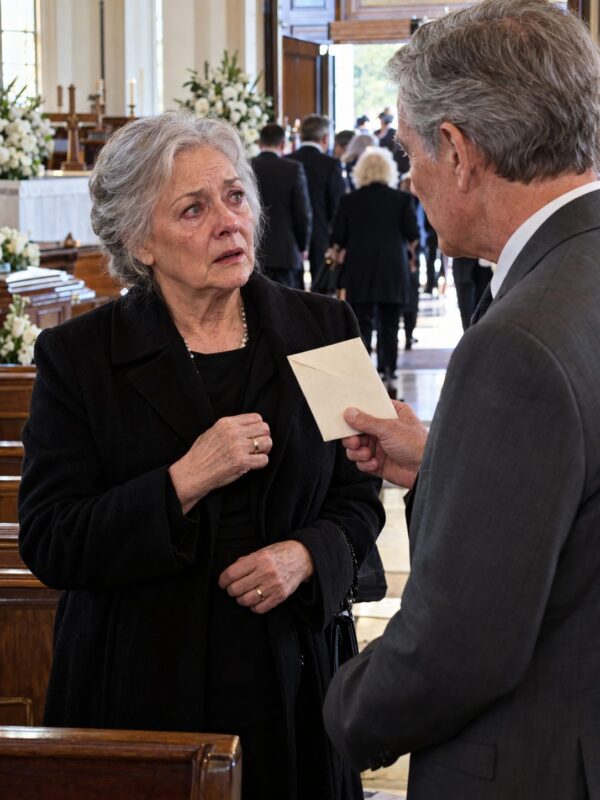
I wouldn’t discover it until after we buried him, when his attorney pressed a small brass key into my hand—the key to a safe-deposit box.
Inside were letters, photographs, old documents, and the answer to the question that had haunted most of my adult life: Why had Thomas walked away from me just a month before our wedding?
When Thomas called out of the blue after fifty-five years, I was so shocked I could barely speak. He was the absolute last person on earth I expected to hear from.
There was a pause on the other end of the line, and I could hear someone breathing softly.
Then he said my name.
«Eleanor.»
I recognized that voice instantly. Decades had passed, but something inside me knew it before my brain could even catch up. I sat down at my kitchen table so fast that tea spilled right across the saucer.
«Thomas?»
A weak, brief laugh came through the speaker. «So you remember me.»
I glanced toward the framed photograph of my late husband, George, sitting on the shelf. George had been gone for four years by then. We had shared forty-six good years together—raising three children, welcoming five grandchildren, arguing about bills, surviving vacations that went completely off the rails, enduring illnesses, celebrating birthdays, and building the kind of ordinary life that only becomes precious when you look back on it.
I would never call my marriage to George second-best. It wasn’t. He had been my partner, my anchor, and the man who stood beside me through nearly half a century.
But before George, there had been Thomas.
And when we were eighteen, I truly believed Thomas and I were going to grow old side by side. We had already picked out names for children we didn’t have yet. We walked past houses and argued playfully over which one we would buy someday.
Then, beneath an oak tree behind my parents’ church, Thomas slipped a thin gold ring onto my finger and asked me to marry him. I said yes.
I never imagined that the same man would become the greatest unanswered mystery of my life.
Just one month before our wedding, a letter arrived. It contained only a few sentences:
Eleanor,
I have made my choice. I cannot marry you. Do not wait for me, and do not try to contact me.
Thomas.
That was it. No explanation. No real goodbye. No chance for one final conversation. Within weeks, Thomas had packed up and moved away.
For years, I tortured myself wondering what I had missed. I replayed every conversation, every kiss, every promise, every moment when he looked at me like I hung the stars. Had there been someone else? Had he fallen out of love? Had he suddenly realized I wasn’t enough?
The uncertainty was often more painful than the rejection itself.
Eventually, I stopped asking questions I knew had no answers. I married George. I raised our family. I became a teacher, then a grandmother, and eventually a widow. Thomas became a sealed room in my memory—one I had locked away and promised myself I would never open again.
Until that phone call.
«What do you want?» I finally asked.
Another long pause. Then he said: «I am dying.»
I closed my eyes. «I’m so sorry.»
«Pancreatic cancer,» he replied. «The doctors say I have weeks, not months.»
I gripped the phone tighter. «Then why are you calling me?»
«Because I need to ask you for one last favor.»
He asked me to come see him the following afternoon.
When I told my daughter Rachel, she thought I had completely lost my mind.
«He abandoned you,» she argued. «Now he calls because he’s dying and expects you to come running?»
«He isn’t asking me to run.»
«Mom, you don’t even know what he wants.»
She was right. I didn’t.
Thomas lived about two hours away in a private care facility. The next afternoon, I drove out there. When I stepped into his room, an old man sat hunched by the window. For a second, I couldn’t see a single trace of the young man I had loved.
Then he looked up. His eyes were still the same.
«Eleanor.»
I stayed near the door. «You look well,» he murmured.
I looked right back at him. «You look terrible.»
He let out a soft, wheezing laugh. «Still as honest as ever.»
He was painfully thin, his skin a pale gray, with his hands trembling on the armrests. An oxygen tube ran beneath his nose. Then I noticed something sitting on the bedside table: a photograph of me at eighteen.
I stared at it. «Why do you have that?»
«I kept more than I should have.» He gestured toward a chair.
I sat down, but I left my coat on. I had zero intention of staying a minute longer than necessary. «What’s the favor?»
Thomas looked out the window. «Marry me.»
For a moment, I thought my ears were playing tricks on me. «What?»
«I am asking you to become my wife.»
I stared at him, bewildered. «You’re dying.»
«I know.»
«We haven’t spoken in fifty-five years.»
«I know that too.»
I stood up. «This is cruel.»
«No, it isn’t.»
«You break my heart, disappear for half a century, and then call me on your deathbed because you’re lonely?»
«It isn’t about loneliness.»
«Then what is it?»
His eyes welled with tears. «I can’t explain everything just yet.»
I let out a bitter laugh. «Of course you can’t.»
«I need you to trust me one last time.»
«You’re asking the one person on earth who has every reason not to.»
He lowered his head. «I know.»
I turned around and left without saying goodbye.
That evening, I briefed my children on what had happened. Rachel was furious, while my son, Andrew, immediately wondered if Thomas was trying to leave me money.
«Maybe this is about an inheritance,» Andrew suggested.
«I don’t want anything from him,» I said.
My youngest daughter, Claire, stayed quiet for a long time. Finally, she asked the question none of us wanted to voice: «Mom… do you still love him?»
I looked at George’s photograph on the mantel. «Love doesn’t always magically disappear just because you start a new life.»
Rachel shook her head. «That’s not an answer.»
«It’s the only one I have.»
The next morning, Thomas called again.
«I’m sorry,» he said softly. «I had no right to lay that on you.»
«No, you didn’t.»
«I have documents, letters, and proof of things you deserve to know. But if I die before you have legal standing, my family will lock everything down.»
«What kind of things?»
«The truth about why I left.»
My heart skipped a beat. «What truth?»
«I need you to marry me, Eleanor. It isn’t for money. It isn’t to erase the life you built with George. I need you to be the person with unquestioned authority to carry out my final instructions.»
«You have an attorney.»
«My relatives are already circling my estate plan. They’ll bury everything if they can.»
«Why would they care about two old people and a broken engagement fifty years ago?»
Thomas fell silent for a moment. Then he said, «Because my father was not the man the world believed he was.»
Three weeks later, I married him.
The ceremony took place in the small library of the care facility. Only six people were present: my three children, Thomas’s attorney, a nurse, and a judge who had known Thomas for years and agreed to officiate.
Thomas’s relatives refused to show up. One of his nephews even sent me a venomous text message accusing me of gold-digging.
Before the ceremony, Rachel pulled me aside one last time. «Mom, you don’t owe him this.»
«I know.»
«Then why are you doing it?»
I looked at her. «Because I’ve spent fifty-five years wondering why he left. I refuse to spend whatever time I have left wondering what he was trying to tell me.»
Thomas wore a dark suit that hung loosely off his frail shoulders. When he took my hand, his fingers were ice-cold.
«I’m sorry,» he whispered.
«For which part?»
«All of it.»
We were married for seventeen days.
Most of that time wasn’t romantic in the traditional sense—it was filled with medication schedules, nurses, short conversations, and long stretches where Thomas slept. He never pretended we were young again, nor did he act like we could reclaim the life we lost. Instead, he asked about George. He wanted to know if I had been happy.
«Yes,» I told him. «I loved him.»
Thomas nodded with a genuine smile. «I’m glad.»
The raw honesty of that answer hurt more than jealousy ever could have.
On our final night together, Thomas looked at me with fading strength and said, «There is a brass key. My attorney will give it to you after the funeral.»
«What does it open?»
«A safe-deposit box.»
«What’s inside?»
«Everything I should have told you all those years ago.»
«Tell me now,» I urged.
His breathing had grown shallow. «I’m… so ashamed.»
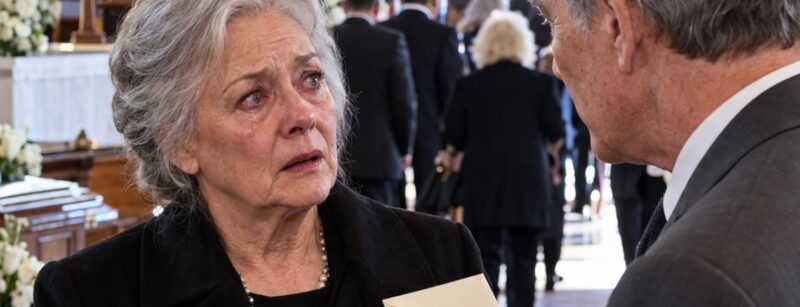
«Thomas—»
He opened his eyes one last time. «My father lied to me. I only found out how much a few months ago.»
«What did he lie about?»
Thomas tried to speak, but pain swept across his face. A nurse rushed over and adjusted his IV. He slipped away quietly before dawn, with my hand wrapped tightly around his.
At the funeral, I stood near the very back. Thomas’s relatives occupied the front rows, glaring at me as if I were an intruder rather than his legal wife.
Before the service started, his nephew Stephen intercepted me by the aisle. «I hope you enjoyed your little performance,» he sneered.
I stared him down. «I buried one husband already, Stephen. I am not about to argue with you about another.»
«You were married for seventeen days.»
«And yet, I am still his wife.»
His face tightened with rage. That was the exact moment I realized Thomas had been entirely right to worry.
After the burial, his attorney, Mr. Bell, approached me near the cemetery gates. «Mrs. Carter?»
I nodded.
He handed me a small, heavy brass key. «Thomas instructed me to give this to you only after the service concluded.»
The next morning, Mr. Bell accompanied me to the bank. The key unlocked a safe-deposit box held strictly in Thomas’s name, with estate documents designating me as the sole person authorized to access it upon his death.
I expected money. There was none.
Instead, the box held dozens of letters tied together with faded ribbon, old photographs, newspaper clippings, a worn leather journal, and a single sealed envelope bearing my name.
I opened the envelope first:
Eleanor,
When I left you, I believed something that turned out to be a complete lie.
My father told me he had hired a private investigator. He claimed the investigator had pulled your medical records and discovered you carried a severe, rare genetic disorder. He said doctors believed you would die young and that any children we had would inevitably inherit it.
He told me that if I stayed, I would destroy your life and our future children’s lives. He told me that if I truly loved you, I would walk away so you wouldn’t have to carry that burden alone.
My hands shook so badly I could barely hold the paper. The letter went on:
I knew you, Eleanor. You would have sacrificed yourself to protect me. You would have left me believing you were saving my future, and you would have carried that heartbreaking guilt forever.
So I made the choice first. I decided it was better for you to hate me than to spend your life believing you had ruined mine.
So I left.
I pressed the letter against the table, completely breathless. For fifty-five years, I had believed Thomas simply stopped caring. But there was more.
Several months ago, after my father passed away, I finally inherited his personal papers. The investigator never existed. The medical diagnosis never existed.
I wish I had told you. I wish I had asked you. I wish I had tried to fight him. But he forged everything—right down to fake doctor signatures and clinic letterheads—because he wanted me to marry into a family he deemed ‘suitable.’
He knew I wouldn’t let you live with that fabricated guilt. I believed him, and that is my ultimate shame.
I read through Thomas’s journal next. He had documented the exact day his father confronted him with the fake reports, threatening to march to my parents’ house and expose me if Thomas didn’t end things within twenty-four hours.
One entry hit me like a physical blow:
Eleanor would sacrifice herself without hesitation. If one of us has to be the villain in her eyes so she can move on unburdened, let it be me.
Mr. Bell quietly slid a box of tissues across the table as tears blurred my vision.
The rest of the box contained fifty-five years of quiet longing. Thomas had written letters to me on every single birthday. He kept newspaper clippings of my teaching awards, photographs of me at community events, and the birth announcement of my daughter Rachel. One single letter, written shortly after George passed away, remained sealed:
I was deeply sorry to learn of your loss. I will not intrude on your grief now. Loving you from afar for all these decades never gave me the right to step back into your life just because mine felt empty.
At the very bottom of the box were the actual forged medical documents his father had used to tear us apart. Even a glance revealed the glaring inconsistencies—mismatched fonts, dates that didn’t align, and doctors’ names from clinics that hadn’t even existed at the time.
The lie hadn’t been an impulsive mistake. It had been a calculated execution.
By evening, Thomas’s family learned I had cleared out the box.
That’s what happens when a powerful family spends generations controlling their pristine public image—they panic the second someone threatens to expose the rot underneath.
Stephen called me within hours. «Those documents are private family property.»
«They were left to me legally.»
«My uncle was heavily medicated and confused!»
«He knew exactly what he was doing,» I fired back.
«We are challenging the marriage.»
The lawsuit arrived four days later. Thomas’s relatives claimed he had lacked the mental capacity to marry me or alter his estate directives. They argued that I had preyed on a dying man and demanded the safe-deposit box be surrendered to the court while they sorted it out. They also filed for an immediate gag order to prevent me from making any of the documents public.
I could have walked away. I already had my closure. I knew Thomas hadn’t stopped loving me.
But this was bigger than just the two of us now. Thomas’s father had been a celebrated philanthropist whose name was plastered across local hospitals, scholarships, and public buildings. The family wanted to preserve that golden legacy by burying the cruelty it was built on.
So, I stood my ground and hired a fierce attorney.
The legal battle dragged on for seven months. Thomas’s doctors testified unequivocally that he had been mentally competent. The judge who performed our ceremony took the stand to confirm that Thomas understood the full weight of what he was doing. Finally, Mr. Bell submitted voice recordings of Thomas explaining his precise wishes months before he ever reached out to me.
On one recording, Thomas’s voice rang out clearly:
I am not marrying Eleanor to transfer wealth; most of my estate is already allocated elsewhere. I am marrying her because she is the person most wronged by these documents, and she is the only person I trust to bring the truth to light.
The court ruled decisively in my favor. Our marriage was recognized as entirely valid, and the contents of the box legally belonged to me.
When the verdict was handed down, Stephen stormed out of the courtroom without even looking my way.
There was no joy in winning. Proving that an old man had spent his final days trying to atone for a lifetime of silence isn’t a victory—it’s just a sad validation of time lost.
With my lawyer’s guidance, I handed copies of the records over to an investigative journalist. The story broke nationwide. While powerful dynasties rarely collapse overnight from a single scandal, the foundation’s pristine reputation was permanently stained. Former employees came forward with accounts of intimidation, and the institutions bearing his father’s name were forced to answer tough questions.
For the first time, the family lost control of their own narrative.
A year after Thomas passed away, I drove out to the cemetery alone. I brought the very first letter he had written me all those decades ago—the one he never sent.
The cemetery was peaceful, the afternoon sun filtering warmly through the oak trees. I sat right on the grass beside his headstone.
«I was angry with you for most of my life,» I whispered to the stone. «Then, for a while, I was just angry that you had wasted yours.»
The wind rustled softly through the leaves overhead.
«You should have trusted me with the truth, Thomas.»
Love couldn’t magically erase his choice. His father had manipulated him, yes, but Thomas had still chosen silence in the end. He had chosen for me, just like his father had chosen for him. I could forgive him without pretending his misguided sacrifice made everything right.
I gently brushed my fingers against his carved name.
«I loved George. I loved our children. I had a wonderful life.» My voice cracked slightly. «But I never stopped loving the boy under that oak tree.»
For fifty-five years, I believed Thomas abandoned me because he simply didn’t care anymore. Only after his death did I understand what that choice actually cost him.
He hadn’t left because he wanted a different life. He left because he genuinely believed throwing ours away would save me.
He was wrong. But he wasn’t heartless.
And in the final weeks of his life, he did the only thing he had left in his power to do: he gave me the truth back.
I smiled through my tears, finally letting myself whisper the words I hadn’t allowed to cross my lips since I was eighteen:
«I never stopped loving you, Thomas.»
Then I stood up and walked back to my car, carrying both lives with me—the one I had so gratefully lived, and the one we were cheated out of.





