When my parents signed all three family houses over to my brother and told me, “Daughters marry out. He’s the one who carries our name,” I signed the papers without a fight, sold everything I owned, and moved to Canada. Months later, on Thanksgiving, Mom called as though nothing had happened. “Wire your brother $30,000. He needs help.” I smiled and said, “Ask him what happened to those three houses first.” Then I told her what I had done before leaving—and the other end of the line went completely silent.
The first time my mother made it clear that I mattered less than my brother, she smiled as casually as if she were talking about the weather.
The second time, she pushed three property deeds across the dining table.
“Daughters marry out. Daniel carries our name.”
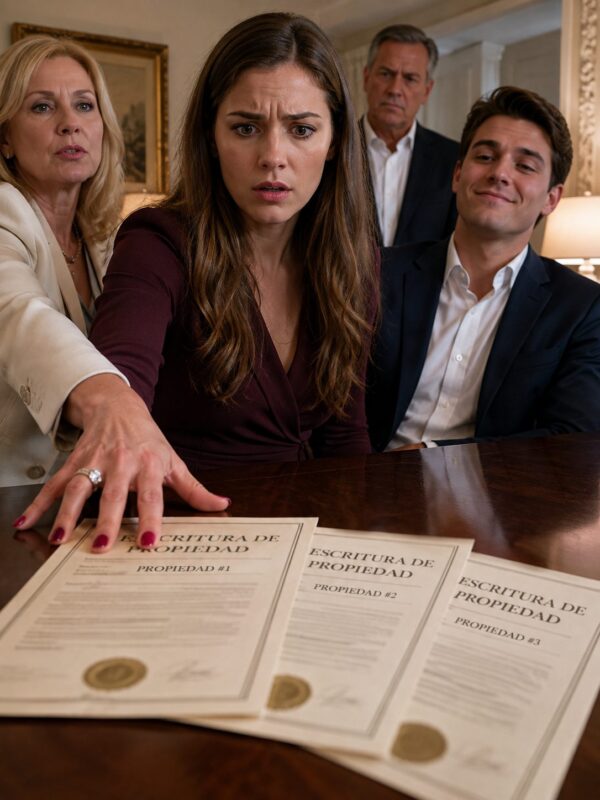
I stared down at the documents. Three houses: the red-brick duplex my grandfather built, the lake house my father renovated partly with money I had quietly loaned him, and the downtown townhouse I had spent two years managing, repairing, and refinancing while Daniel jumped from one business opportunity to another.
Dad crossed his arms. “Don’t make this emotional, Claire.”
Daniel leaned back in his chair with a grin. “You’ll marry some Canadian guy and forget about all this anyway.”
I nearly laughed. For six years, I had handled the family finances, knowing every mortgage balance, every tax payment, and every late bill Daniel caused. What none of them remembered was that two years earlier, when Dad’s construction company nearly collapsed, I had rescued it with a private loan of $180,000. My lawyer had drafted and notarized the agreement, secured against all three family properties.
My parents had dismissed it as “temporary paperwork.” I had considered it protection.
So I signed the transfer documents without arguing. Mom visibly relaxed, and Daniel looked like he had won.
“That’s better,” Dad said. “Family shouldn’t fight over money.”
I collected my copies and stood up. Daniel lifted his glass. “No hard feelings, sis?”
“None,” I replied.
That night, I sold my car, shut down my small consulting business, packed everything I wanted into eight boxes, and accepted a financial compliance position in Toronto. While closing my suitcase, I remembered years of birthdays when Daniel received investment money while I received advice about finding a husband. But I wasn’t angry anymore. The anger had burned itself out, leaving a cold clarity: the decision to stop financing people who mistook my sacrifices for weakness.
Before flying out, I met with my lawyer, Melissa Grant.
“Once the title transfers are registered,” she explained, “your security interest stays attached to the properties. If Daniel defaults on the obligations behind that loan, you can enforce it.”
“He will,” I said.
Melissa studied me. “You sound very certain.”
I thought about Daniel’s leased Porsche, his gambling apps, and his habit of borrowing money today against money he expected to make tomorrow. “He thinks houses are money,” I said. “He doesn’t understand houses can also be debt.”
Three months after my move to Toronto, Daniel posted pictures from the lake house—champagne, a speedboat, twelve guests—captioned KING OF THE FAMILY. Mom responded with three crown emojis.
I looked out over the Toronto skyline, closed the app, and went back to work. Because I already knew something they didn’t: Daniel had borrowed more money against properties that had never actually been free and clear.
By October, Daniel had turned his inheritance into a show. He refinanced the townhouse to launch a luxury car dealership, borrowed against the duplex to renovate the lake house, and persuaded Mom and Dad to guarantee a short-term business loan. Every week, social media displayed new watches, expensive dinners, and a glass-walled office with DANIEL PARKER HOLDINGS on the door. Mom kept sending me screenshots: “See? Your brother is building something real.” I never answered.
In Toronto, I spent my days reviewing corporate risk and tracing financial obligations. At night, Melissa sent me public filings from back home. Daniel missed the first payment connected to my secured loan, then missed the second. Under the agreement, those missed payments triggered a default, making the entire balance immediately due.
Melissa called. “We can issue formal notice now.”
“Do it.”
Daniel received the notice on a Tuesday and called me twenty-three times. I picked up on call number twenty-four.
“What the hell is this?” he shouted.
“A notice of default.”
“You signed the houses over to me!”
“I signed away my ownership claim. I never forgave the debt secured against them.”
Silence. Then he gave a laugh that sounded much too loud. “Dad said that old loan was family money.”
“Dad signed a secured promissory note.”
“You wouldn’t take your own family’s houses.”
“They’re your houses, remember?”
He hung up. That should have scared him. Instead, his arrogance made him more reckless. Daniel moved money out of the dealership, made one partial payment, and then stopped paying again. Worse, Melissa discovered he had submitted financing documents claiming the properties had no existing private encumbrances. When the lender’s lawyers reviewed the records, they found my registered security interest.
The dealership financing froze overnight. Daniel’s business partner walked away, and the Porsche vanished from Instagram. Then Dad called me.
“You’ve embarrassed your brother.”
“He embarrassed himself.”
“You knew this would happen.”
“I knew what the contracts said. Daniel decided what to do with them.”
Dad’s tone hardened. “Release the lien.”
“No.”
“You owe this family.”
I almost admired the absurdity of that sentence. I had loaned them $180,000 when Dad’s employees were weeks away from losing their jobs, managed rental properties without pay, and covered Mom’s property taxes while she recovered from surgery. Yet somehow, the daughter who spent years saving everyone was still the person who owed them.
That was when I understood: Daniel had never truly believed I was weak; he had needed me to believe I was weak. Because a confident Claire would read every contract, remember every debt, and stop cleaning up after him.
Melissa told me to remain patient. The foreclosure process had started, but Daniel still had a cure period to refinance honestly or voluntarily sell a property to repay my loan. I sent those options to him in writing. His reply contained six words: YOU’LL NEVER TAKE WHAT IS MINE.
So I stopped trying to rescue him.

By Thanksgiving morning, enforcement notices had been issued against all three properties, and Daniel still hadn’t told Mom and Dad.
Thanksgiving evening, snow drifted past the windows of my Toronto apartment when my phone rang. Mom. I answered on speaker while slicing apples for pie. Her voice sounded cheerful.
“Claire, sweetheart. Happy Thanksgiving.”
“Happy Thanksgiving.”
There was a brief pause before she revealed the real reason she had called. “Your brother is having a difficult month. Wire him thirty thousand dollars tonight. He needs help closing something.”
I put down the knife. “Thirty thousand?”
“Don’t be dramatic. You have a good job. Daniel has responsibilities now.”
I smiled. “Ask him what happened to those three houses first.”
Silence. “What do you mean?”
In the background, I heard Dad ask, “What is she saying?” Then Daniel shouted, “Hang up.”
Mom didn’t. So I explained.
“Before I left, I instructed my lawyer not to release the security agreement Dad signed when I loaned this family $180,000. Those houses were collateral. Giving Daniel ownership never erased the debt. He defaulted, lied on new financing documents, and ignored every opportunity I gave him to fix it.”
Mom’s breathing changed. “Daniel?”
“I was going to handle it,” he snapped.
I continued. “The cure period expired yesterday. The townhouse will be sold first. The proceeds will repay my principal, interest, and legal expenses. If that clears the debt, enforcement against the other properties stops. If it doesn’t, the duplex or lake house comes next.”
Dad grabbed the phone. “You planned this!”
“No. I protected myself. Daniel planned everything that happened afterward.”
“You trapped your brother.”
“I offered him the chance to sell one property voluntarily. He refused.”
Another silence. Then I told them the part that finally shattered their confidence. “The townhouse already has a buyer.”
Daniel screamed my name. I never raised my voice.
“You wanted those houses because you said carrying the family name entitled you to them. Fine. You got the titles, the debt, the taxes, the risks, and the consequences. That’s what ownership means.”
Mom began crying. “You’re destroying this family.”
“No,” I said. “I’m finally refusing to finance it.”
Then I ended the call.
The townhouse sale closed three weeks later, repaying my $180,000 loan in full with interest and legal fees. Because Daniel’s additional borrowing had eaten through the remaining equity, he had to sell the lake house to satisfy another lender, and the dealership collapsed. Dad came out of retirement to help cover household bills, and they managed to keep the duplex—barely.
Eight months later, I bought a bright two-bedroom condo overlooking Lake Ontario with money I had earned, protected, and never needed anyone’s permission to own. Eventually, Mom sent me a message: We miss you.
I replied: I hope you’re well. Nothing else.
For the first time in my life, peace didn’t come from earning my family’s approval. It came from finally giving myself my own. Standing on my balcony that summer, watching the city glow beneath me, I realized revenge had never been about watching them lose everything. It was realizing I no longer had to be the daughter who kept saving people who only knew how to value sons.





